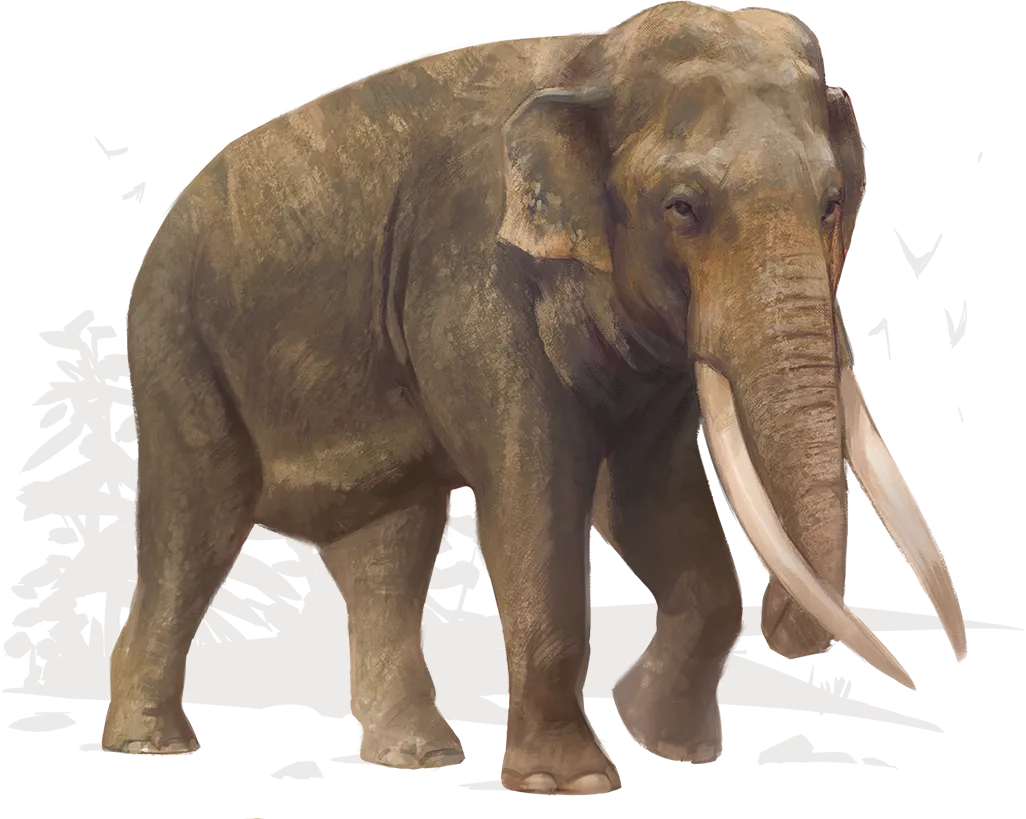
Elephant
Animals
Use these stat blocks to represent the creatures they’re named for or other similar creatures. For example, the Panther stat block can also represent a mountain lion, while the Giant Goat stat block might represent a buffalo. Any of these stat blocks might also serve as fantastical animals with distinctive names and cosmetic details unique to your D&D adventures.
Gallery
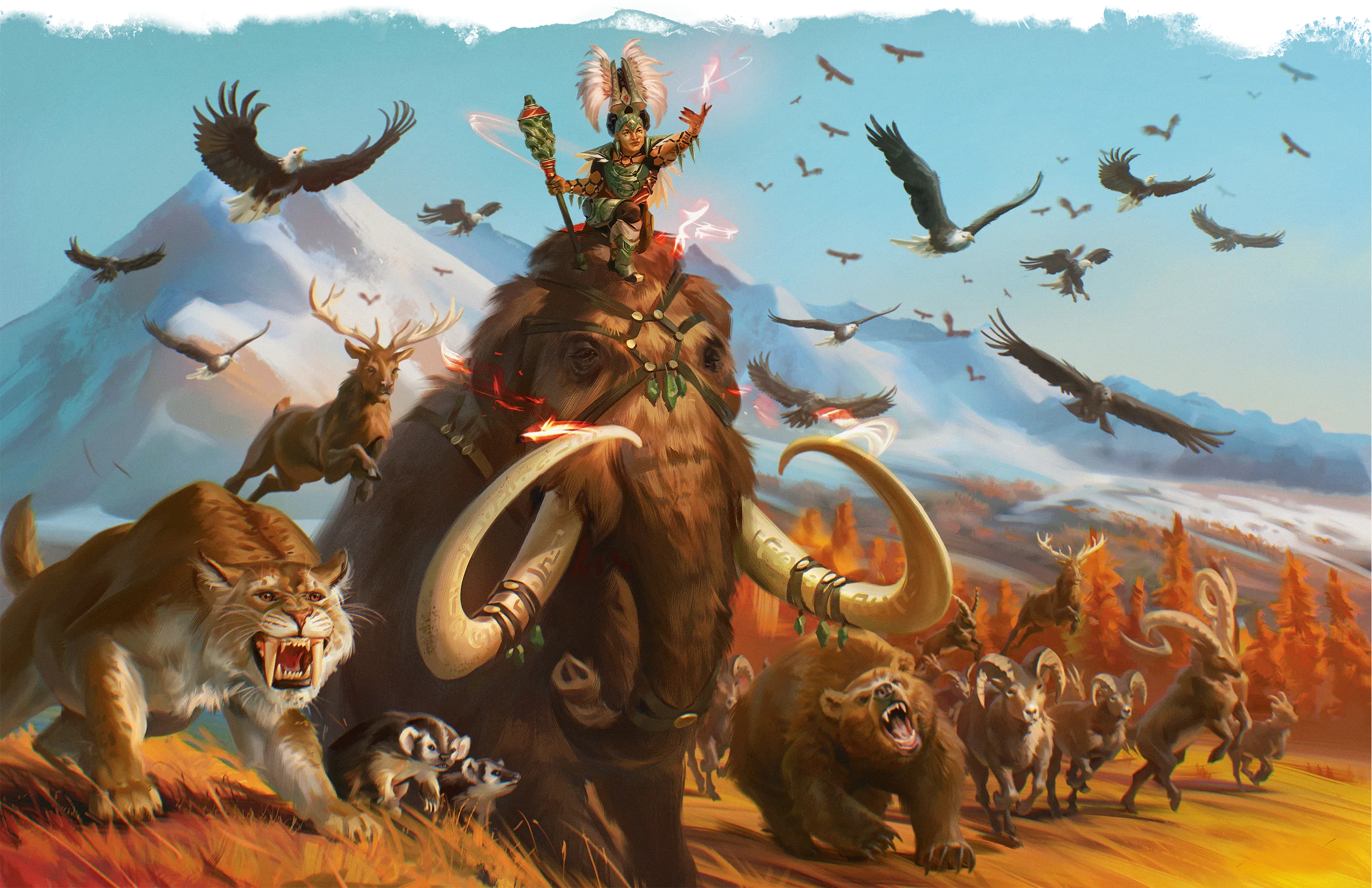

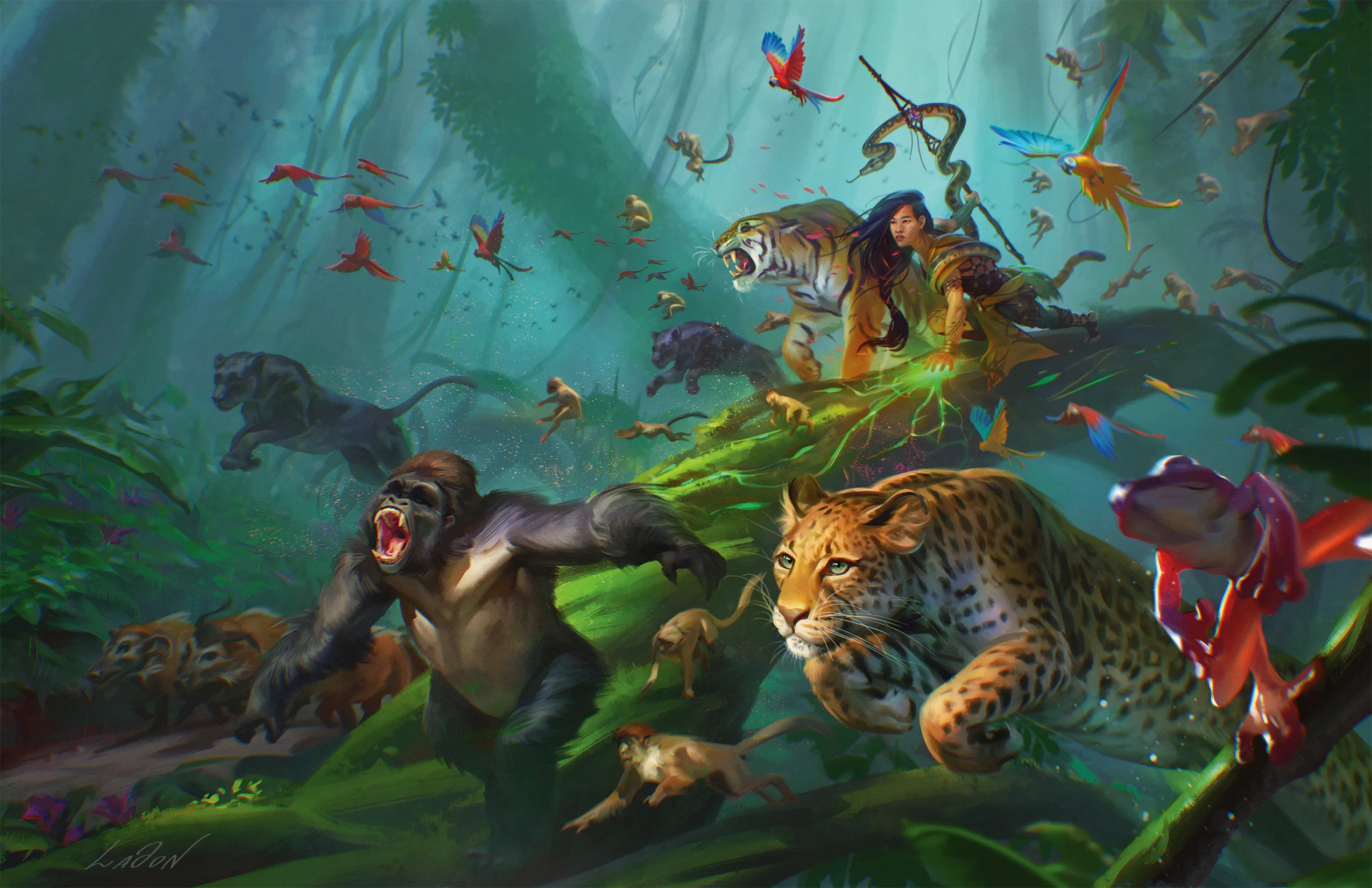
title: Elephant

*Huge beast, Unaligned*
- **Armor Class** 12
- **Hit Points** 76 (8d12 + 24)
- **Speed** 40 ft.
|STR|DEX|CON|INT|WIS|CHA|
|:---:|:---:|:---:|:---:|:---:|:---:|
|22 (+6)| 9 (-1)|17 (+3)| 3 (-4)|11 (+0)| 6 (-2)|
- **Proficiency Bonus** +2
- **Saving Throws** ⏤
- **Skills** ⏤
- **Senses** passive Perception 10
- **Languages** —
- **Challenge** 4
## Actions
***Multiattack.*** The elephant makes two Gore attacks.
***Gore.*** *Melee Attack Roll:* `+8`, reach 5 ft. *Hit:* 15 (`2d8 + 6`) Piercing damage. If the target is a Huge or smaller creature and the elephant moved 20+ feet straight toward it immediately before the hit, the target has the [Prone](/Mechanics/CLI/conditions.md#Prone) condition.
## Bonus Actions
***Trample.*** *Dexterity Saving Throw:* DC 16, one creature within 5 feet that has the [Prone](/Mechanics/CLI/conditions.md#Prone) condition. *Failure:* 17 (`2d10 + 6`) Bludgeoning damage. *Success:* Half damage.
Environment
grassland
Sources
Monster Manual (2024) p. 353, Player’s Handbook (2024) p. 349. Available in the SRD and the Free Rules (2024)